The Best Claude Skills for a Lean Ops Team

You enabled Claude Skills, browsed the official repo, and installed three or four that looked useful. In a chat they are genuinely impressive: Claude formats a spreadsheet correctly, pulls line items out of a supplier PDF, drafts a deck. Then you close the tab and nothing runs. The skill sits there until you remember to open Claude and ask again.
That gap between "a skill is impressive" and "a skill does the work while I sleep" is the whole story for an operator. The skills themselves are cheap. Knowing which ones actually earn their keep, and what it takes to wire one into a process that runs on a trigger, is the part worth thinking about.
So the ranking below is sorted by what actually earns its place on a lean team, official skills marked apart from community ones. The harder question it keeps coming back to is where a skill stops being a handy document and turns into infrastructure someone has to build and keep alive.
What makes a Claude Skill worth your time
A skill is a folder with a SKILL.md file at its center: YAML frontmatter with a name and description, then Markdown instructions Claude follows once the skill is selected. Here the question is narrower. Out of a growing pile of them, which ones are actually worth installing?
Four things separate a skill that pays off from one you install and forget.
- It replaces a task you repeat. The value is in a job you would otherwise re-explain to Claude every week: format this export our way, extract these fields from that PDF, draft a reply in our tone. A one-off does not need a skill.
- It leans on a script, not just prose. The strongest skills bundle code Claude runs when code is more reliable than free-form generation, like writing real Excel formulas or filling a PDF form field by field. That is the difference between "looks right" and "is right."
- It is portable. A good skill runs the same way in the Claude app, in Claude Code, and through the API, so the work you put into it is not locked to one surface.
- It does one thing. A skill scoped to a single job composes cleanly with others. Claude can stack a data-extraction skill with a document-formatting skill in one run. A sprawling skill that tries to do everything triggers at the wrong times.
Hold each candidate against those four. Most community skills fail at least one, usually the script test.
The best Claude Skills for a lean team, ranked
Anthropic ships four built-in skills and publishes an open library of examples on its skills GitHub repo. Beyond that, a large community collection lives in ComposioHQ's awesome-claude-skills. There is no official storefront for these; you browse the repos directly. Here is what is actually worth your attention, most useful first for an ops team.
One thing to check before you count on any of them: Skills run across claude.ai (Free, Pro, Max, Team, and Enterprise), Claude Code in beta, and the API, but most lean on code execution, which has to be enabled. If it is off, the document and extraction skills below will not do much. Confirm that switch first, then rank.
1. The built-in document skills: xlsx, docx, pptx, pdf
These four ship inside Claude apps and the API, and Claude reaches for them automatically when code execution and file creation are on, per Anthropic's Agent Skills overview. You do not install them. They are the ones a lean team touches first because they map directly to the busywork you already do by hand.
- xlsx builds and analyzes spreadsheets with real formulas and charts, not a screenshot of a table.
- docx creates and edits Word documents with formatting, comments, and tracked changes.
- pptx generates and edits slide decks, layouts, and templates.
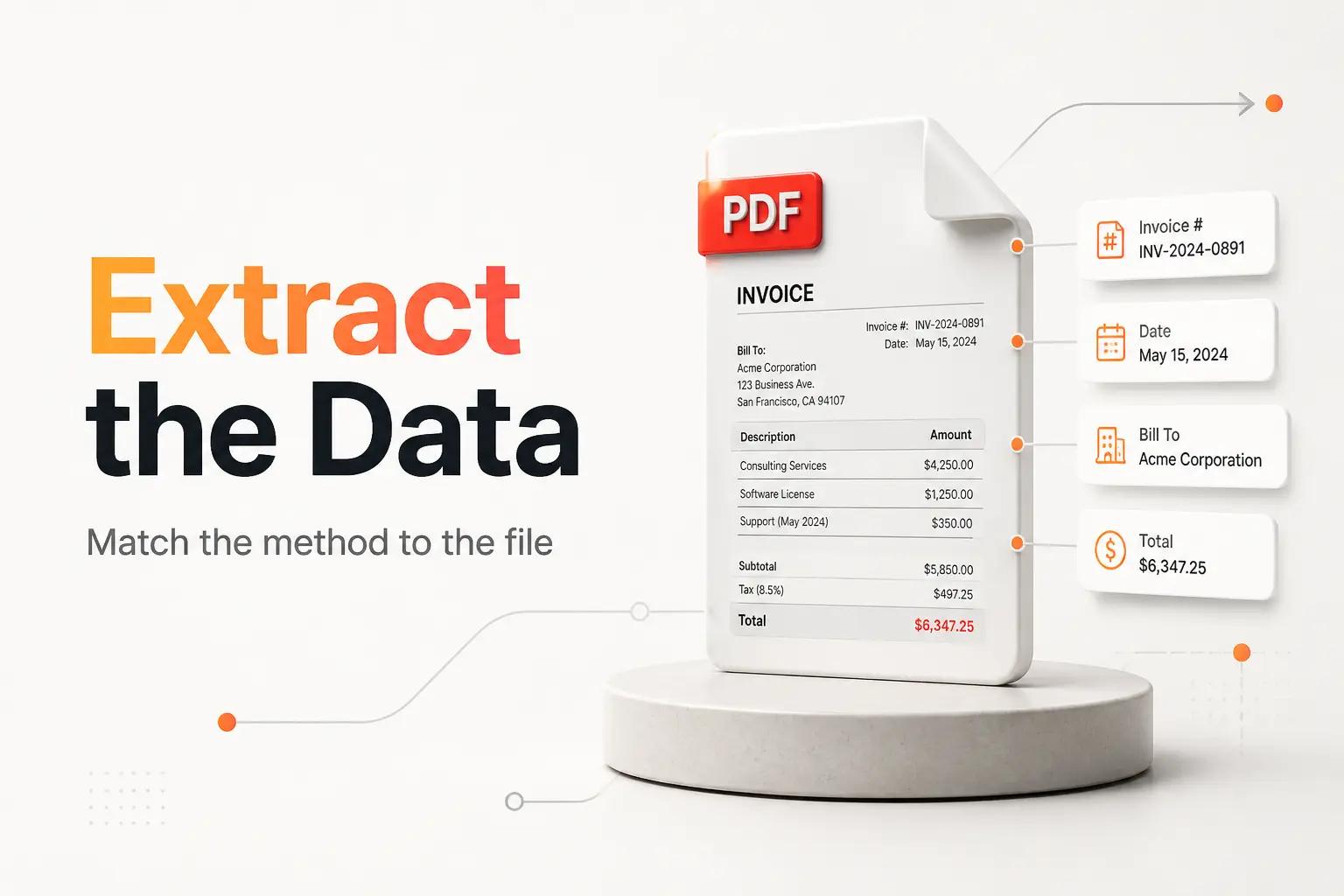
- pdf creates PDFs and, more usefully for ops, extracts text and data out of them.
If you only ever use one category of skill, it is this one. A monthly board deck, a formatted export, a batch of supplier invoices read into a sheet: that is the daily grind these were built for.
2. pdf, used for extraction
Worth calling out on its own. The single most common request we hear from operators is some version of "read the fields off this PDF and put them in a row." The built-in pdf skill does the reading reliably because it runs code against the document rather than eyeballing it. Pair it later with a connection to your sheet or CRM and you have replaced a genuinely tedious job.
3. mcp-builder (community)
This one is not an official pre-built skill. It appears in community collections, not Anthropic's core set, so treat it as a helper rather than a supported product. What it does is useful: it scaffolds the MCP server code that gives Claude live access to an external system. Skills tell Claude how to do a task. MCP is what it can reach. If you are heading toward a real automation, something has to build that connection, and this speeds up the plumbing.
4. A custom SOP skill you write yourself
The most valuable skill for your team is usually not on any list. It is the one you write for a job only your team does: "draft a refund reply in our voice," "format this data as our specific board deck," "score this inbound lead the way we score them." Because SKILL.md is just Markdown, a simple version takes an afternoon. Copy a template from Anthropic's repo, drop in your instructions, done — see the five-step build below. Community favorites like brand-guidelines exist for exactly this reason, but your own SOP written down beats a generic one.
5. The design and artifact skills (community)
If your work touches front-end or visual output, community skills like frontend-design, theme-factory, and web-artifacts-builder produce noticeably more polished results than a cold prompt. Most ops teams do not need these day to day. They matter if you are shipping customer-facing pages or internal tools with a UI. Skip them if you are moving data between systems.
How to build your own Claude Skill, in five steps
If nothing on the list above covers your actual job, write one. A skill is a folder with SKILL.md at its root, and a working first version is an afternoon, not a project.
- Pick a job worth packaging. Name a task you repeat and re-explain often, with a right answer you can describe: "score this inbound lead the way we score them," "turn a supplier PDF into a row with these exact fields." Scope it to one job. A skill that tries to cover invoicing and lead scoring and deck formatting triggers at the wrong times. If the task happens once a quarter, skip the skill and just do it by hand.
- Create the folder and
SKILL.md. Name the folder lowercase with hyphens, matching thenamefield inside. The file needs only YAML frontmatter withnameanddescription, then Markdown instructions below it, per Anthropic's Agent Skills overview.namemaxes out at 64 characters and cannot contain "claude" or "anthropic." - Write the description so it actually triggers. This is the field most first skills get wrong. Claude reads
descriptionbefore anything else to decide whether a task matches, so write it in third person and name the concrete triggers: the file types, the task words, the situation. "Helps with invoices" never fires. "Formats raw Stripe or QuickBooks exports into the company's standard monthly invoice layout. Use when the user provides a CSV of transactions and asks for invoices or a month-end statement" does. - Write the body like a table of contents, not a manual. Claude loads skills through progressive disclosure: it reads
nameanddescriptionfirst, loads the fullSKILL.mdbody only if it matches, and opens areferences/,scripts/, orassets/file only when the instructions point to it. Keep the body under roughly 500 lines, push deep detail intoreferences/, and put anything that needs to be exact every time, like a calculation, into a script Claude runs instead of prose it interprets. - Package and install it. Zip the skill folder itself, not its contents, so
SKILL.mdsits one level down inside the archive, per Anthropic's support guide. In claude.ai, go to Settings > Customize > Skills > Create skill > Upload a skill, and turn on code execution if the skill runs scripts. In Claude Code, drop it in.claude/skills/and invoke it directly with/skill-name, which is also the fastest place to iterate.
The common failure modes are all avoidable: a vague description, zipping the file contents instead of the folder, one skill trying to do three jobs, or a "should be exact" step left to prose instead of a script.
Where a skill stops and a workflow begins
Here is the honest limit of everything above. Every one of these skills waits for a human to open Claude and ask. A skill that formats an invoice is one piece of a process. The process is the rest: pulling the closed deal out of your CRM, handing Claude live access to Stripe and Slack, running it on a trigger instead of you remembering, and watching it so a silent failure at 2 a.m. does not surface as an angry client email a week later.
That build is what we do at bottta. Our AI Automation work turns a promising skill into a workflow that runs on its own, with the Integrations wired to your actual tools and the monitoring that keeps it honest. Concretely: the pdf skill reads the supplier invoice, an MCP connection or API writes the extracted rows to your sheet, and a trigger runs the whole thing on every new email instead of when someone remembers. We take it two ways. A $3K per month retainer covers flexible hours, up to 3 active workflows at a time, and ongoing monitoring and fixes. A $4K fixed-scope project ships one defined workflow with integrations included and 30-day post-launch support. Both are on the pricing section. No free tier, because this is built work, not a button.
You can also stitch the wrapper together yourself in a tool like Zapier or n8n and call the API from there. That holds for a simple two-step job. It tends to break the moment the logic gets real, and then you own a brittle setup nobody documented. Before building anything, it is worth being honest about whether the task clears the bar at all, which we laid out in when to automate a task and when not to.
How to choose what to build, buy, or bring in
The decision is not "which skill is best." It is "how far does this need to go."
- A personal, self-contained task. Write the skill yourself or use a built-in one. Nothing to hire out. You are done in an afternoon.
- A repeatable job one person runs. Write a custom SOP skill and keep it in your Claude setup. Still DIY, still cheap.
- A business process that has to run without a person. This is where a skill needs a workflow around it: triggers, live data, error handling, monitoring. That is a build, and it is where working with bottta pays off over a brittle DIY chain.
- A whole function you keep re-explaining. Retainer territory. When you have three or four of these and they keep changing, ongoing hours beat scoping each one as a fixed project.
Skills are also not the only path. For teams that would rather not touch Claude directly, a no-code automation platform or one of the broader AI tools for small business may cover the simpler cases. The trade-off is the same one every time: the cheaper the tool, the more of the workflow you own and maintain yourself.
A quick gut check before you invest in any skill. If the task happens once a quarter, do it by hand. If it happens weekly and one person runs it, write the skill and keep it in your Claude setup. If it happens daily, touches money or customers, and has to run whether or not someone is watching, it has crossed the line from skill to system. At that point the skill is the easy 20% and the workflow around it is the 80% that decides whether it holds up at 5,000 records instead of 50.
Frequently asked questions
What are the official Claude Skills?
Anthropic ships four built-in skills in Claude apps and the API: xlsx, docx, pptx, and pdf. Claude uses them automatically when code execution and file creation are enabled. Everything else you see in roundups is community-built and installed separately.
Where do I find Claude Skills to install?
Anthropic's official examples are in its skills GitHub repo. The largest community directory is ComposioHQ's awesome-claude-skills. In Claude Code you can invoke an installed skill directly by typing /skill-name.
Do I need to code to use Claude Skills?
No for the built-in ones and for writing simple custom skills, since SKILL.md is plain Markdown. Yes for skills that run scripts, and yes for the automation that wraps a skill into a business process that runs on its own.
Are community Claude Skills safe to install? Treat them like any third-party code. A skill can include scripts Claude will run, so read what a community skill does before installing it, especially anything that touches your files or credentials. Stick to the official repo and well-reviewed collections.
Can a Claude Skill run automatically without me? Not on its own. A skill is procedural know-how Claude loads when you ask. Running it on a schedule or a trigger, with live data and monitoring, is a workflow you build around the skill. That is the difference between a useful chat and infrastructure.
If there is a task Claude keeps almost getting right, the fastest path to something dependable is not another skill. It is a workflow built around one, and that is a build bottta can scope with you.