The Best AI Tools for Small Business in 2026
You are probably already paying for AI. A ChatGPT seat here, a Claude subscription there, Grammarly on the marketing person's laptop, maybe a Zapier plan someone set up last year and forgot about. The invoices add up to a few hundred dollars a month. And yet Monday morning still starts the same way: someone opens a form submission, copies the details into the CRM by hand, drafts a reply in ChatGPT, pastes it into email, and updates a spreadsheet to close the loop.
That is the gap almost nobody talks about when they list "the best AI tools." Buying the tool is not the same as automating the work. This post ranks the AI tools a small team actually gets value from in 2026, with current prices, and it is honest about the part the tool vendors leave out: a subscription sits there until someone wires it into your real workflow. That wiring is where the hours actually come back.
Buying an AI tool is not the same as automating the work
In the SBE Council's March 2026 technology survey, 82% of small-business employers said they use at least one AI tool. But the U.S. Census Bureau's Business Trends and Outlook Survey put actual operational AI use at 17% to 20% across late 2025 into 2026. Both numbers are real. The gap between them is the whole story.
Adoption is wide but shallow. A team buys the assistant and uses it like a smarter search bar. Someone opens ChatGPT, types a prompt, reads the answer, and pastes it somewhere by hand. That is useful, but it is a person using a tool, not a workflow doing the work. The lead still does not land in the CRM on its own, and the invoice still does not draft itself when a deal closes.
The tools in this list are genuinely worth paying for. The point is what you do after you pay. A $25 ChatGPT seat that a person babysits saves a few minutes here and there. The same model, wired into a workflow that reads an inbound email, extracts the order details, and writes them straight into your system of record, runs 200 times a day without anyone opening a browser tab. Same tool. Completely different return.
What to look for in an AI tool for a small team
Before the list, the criteria that actually matter when you are choosing. Skip the feature charts. These are the five that decide whether a tool earns its subscription.
- Does it have an API or native integrations? A tool you can only use by logging in and clicking is a tool a human has to operate. A tool with an API or clean integrations can be wired into an automatic workflow. This is the single biggest divider between "AI you use" and "AI that works for you."
- How is it priced, per seat or per usage? Assistants like ChatGPT and Claude are priced per seat. Automation platforms like Zapier and Make are priced per task or operation, so cost scales with volume. Know which one you are buying, because a per-usage tool that fires thousands of times a month can quietly outgrow its plan.
- Does it fit the tools you already run? The best AI tool is usually the one that talks to your CRM, your inbox, and your spreadsheet without a custom bridge. A brilliant tool that lives on an island still leaves you copy-pasting.
- Can a non-developer trust the output? For anything customer-facing or money-touching, the tool needs a way to keep a human in the loop or flag low-confidence output. AI that is right 95% of the time is a liability on the 5% if nobody catches it.
- What does it cost to run, not just to buy? The subscription is the small number. Setup, the glue between tools, and the monitoring that tells you when something breaks are the real cost. We wrote a full test for this in when to automate a task and when not to.
If a tool clears those five, it belongs in your stack. Now the list.
The best AI tools for small businesses in 2026
Here is the honest ranking. The first entry is not a tool you download, because for a small team drowning in manual work, the highest-leverage move in 2026 is not buying one more subscription. It is getting the subscriptions you already have wired into workflows that run on their own.
1. bottta, the team that turns the tools into working systems
bottta is an automation studio. We do not sell you a login. We design and build the workflow that makes the AI tools you are already paying for actually do the work, then we keep it running.
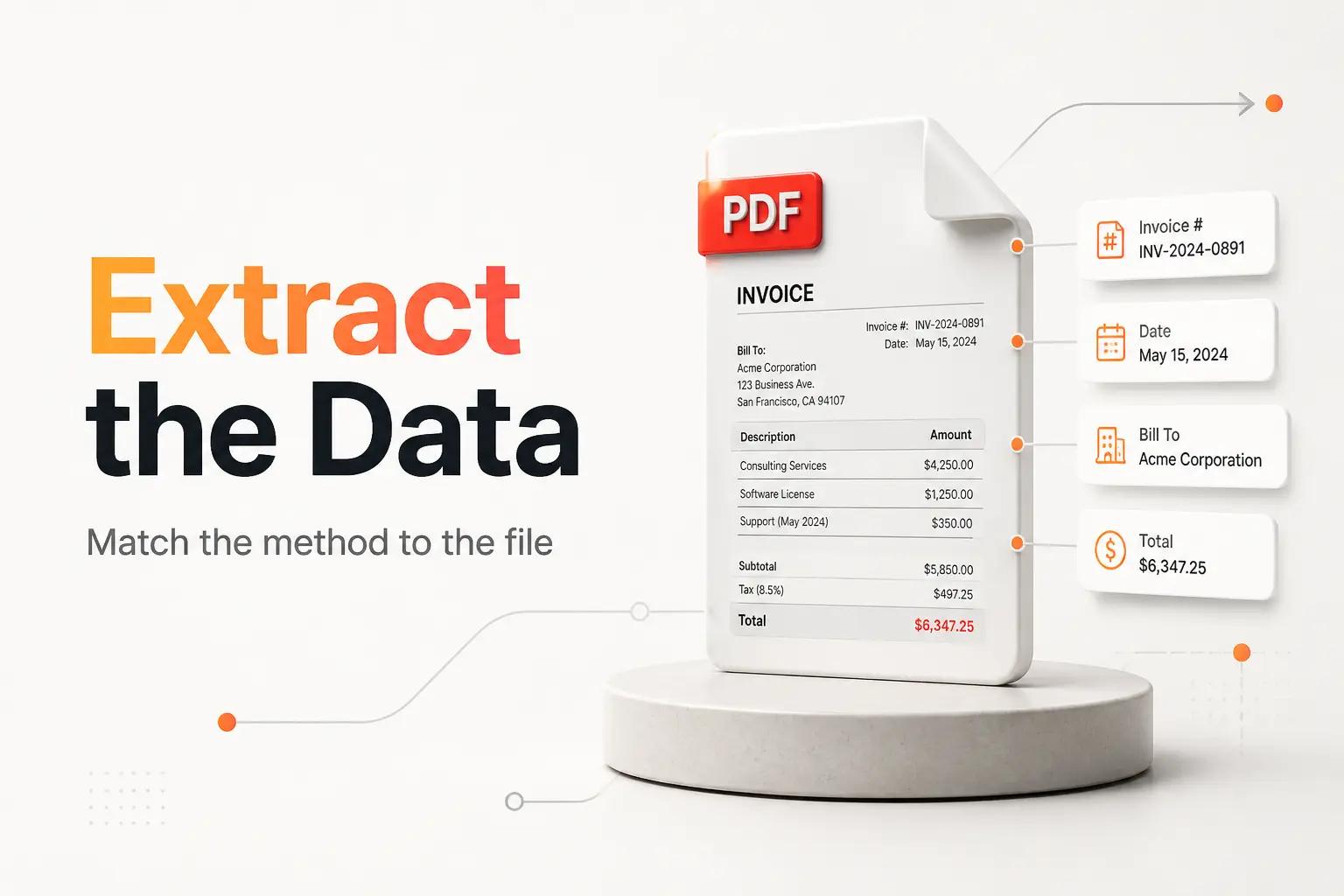
The reason this sits first is simple. ChatGPT, Claude, Zapier, and your CRM are all capable. What most small teams lack is the person to connect them: to map the process, handle the inputs that do not fit the happy path, route the AI's output to the right place, and add monitoring so a silent failure does not cost you a customer. That is our whole job, across four kinds of work: Workflow Design (mapping the process and the clean handoffs), Integrations (the APIs, webhooks, and glue between your tools), AI Automation (LLM routing, data extraction from PDFs and emails, agents), and Custom Builds (the internal dashboard or job that does not exist off the shelf).
Two ways to work with us. The $4K project is a fixed scope and fixed price for one full workflow, integrations included, with 30 days of post-launch support. Good when you have a specific fire to put out, like inbound leads that never land in the CRM cleanly. The $3K/month retainer keeps up to three active workflows built, monitored, and fixed as your stack changes, with async access and a weekly call. Good when you have a steady backlog of manual work and no engineer to hand it to.
Who it is not for: if you have one two-step task and the patience to maintain it yourself, a DIY tool below is cheaper. We will tell you that on the call rather than sell you a build you do not need.
2. ChatGPT, Claude, and Gemini, the general assistants
Every small team should have at least one of these. They draft, summarize, extract, classify, and answer questions across your whole operation, from a sales email to a support reply to a messy spreadsheet you need cleaned up.
Pricing is close to identical. OpenAI's ChatGPT Business runs $25 per user per month billed monthly, or $20 annually. Anthropic's Claude Pro is $20/month for individuals, and Claude Team is $25 per seat per month. If Claude is your pick, the best Claude Skills for a lean ops team is a good next read. Google's Gemini sits in the same band. For most teams the pick comes down to which one your people prefer and, if you plan to automate with it, which API fits your build. All three expose an API, which is what matters once you move past copy-paste.
Best for: every team. Watch for: paying for seats people use like a search bar. The seat is worth far more once its output feeds a workflow instead of a clipboard.
3. Zapier, Make, and n8n, the connective tissue
These are the DIY automation platforms that move data between your tools and, increasingly, call AI models inside a workflow. They are the closest thing to a substitute for a studio build, so they earn a real look.
The pricing model matters more than the sticker. Zapier's Professional plan is $29.99/month for 750 tasks, and it bills per task, so every action step counts. Make's Core plan is $10.59/month for 10,500 operations, which stretches further for multi-step work. n8n's Starter plan is $24/month for 2,500 executions and, because it charges per workflow run rather than per step, complex flows can be dramatically cheaper. We put the three side by side in n8n vs Zapier vs Make if you are choosing between them.
Best for: simple, stable, two-to-three-step handoffs you are willing to own. Watch for: the wall. These tools are great until a workflow needs real error handling, an input that does not fit the shape, or logic no visual builder wants to express. That is the point where teams either bring in help or let a brittle automation quietly rot. If you have hit that wall, that is exactly the handoff we take.
4. HubSpot, the CRM with AI built in
If you do not have a CRM yet, HubSpot is the pragmatic pick for a small team. Its Starter tier is around $20 per seat per month, and recent versions bake AI into drafting, summarizing calls, and scoring leads. Notion Business, at $20 per seat per month, plays a similar role for teams that run on docs instead of a sales pipeline.
Best for: teams that need one system of record and want AI features without stitching them in. Watch for: the AI features are convenient but shallow. The valuable automation, moving a closed deal into Stripe and posting the invoice link to Slack, still lives in the wiring around the CRM, not inside it.
5. Focused tools worth their small price
Not everything needs to connect to everything. A few point tools earn their keep on their own:
| Tool | Job | Price (USD) |
|---|---|---|
| Grammarly | Writing and tone across every app | ~$12/mo |
| Perplexity Pro | Sourced research and answers | $20/mo |
| Otter.ai | Meeting transcription and notes | ~$8/mo |
| Microsoft Copilot | AI inside Microsoft 365 | $21/user/mo |
Best for: a specific, personal job done well. Watch for: stack sprawl. Five $15 tools nobody wired together is $75 a month of logins your team still has to operate by hand.
How to choose, by where your team actually is
The right move depends less on the tools and more on your situation.
If you have almost nothing yet: start with one assistant seat (ChatGPT or Claude, roughly $20 to $25 a month) and, if you lack one, a CRM. Use them manually for a month. You will learn which repetitive tasks actually hurt, which is the only reliable input to what to automate first.
If you already pay for the tools but still copy-paste all day: you do not have a tool problem, you have a wiring problem. Buying a sixth subscription will not fix it. This is the moment a single $4K project usually pays for itself, by turning one painful manual process into a workflow that runs without you. For the bigger picture on that shift, see AI automation for small business.
If manual work is a steady, growing backlog: you need someone who owns the automation over time, not a one-off. That is the case for the $3K/month retainer, where workflows get built, monitored, and repaired as your tools and volume change. The alternative, an in-house ops-automation hire, rarely pencils out below a certain size, and a half-built Zap nobody owns is worse than the manual task it replaced.
Whichever bucket you are in, the tools in this list are the raw material. The finished system is what saves the hours.
Frequently asked questions
What AI tools does a small business actually need?
At minimum, one general assistant (ChatGPT or Claude, around $20 to $25 per seat per month) and a CRM. Everything else should be added because a specific, repeated task justifies it, not because a list said so. The bigger return comes from wiring those tools into workflows, which is where an automation studio like bottta does the work most small teams cannot do in-house.
How much should a small business spend on AI tools per month?
A functional stack of assistants and point tools typically runs $40 to $150 a month for a small team, based on current vendor pricing. The larger and more variable cost is the automation work that connects them. A one-time bottta project is $4K, and the ongoing retainer is $3K per month, which replaces the manual hours the subscriptions alone do not.
Can I just use Zapier instead of hiring someone?
For a simple, stable, two-step handoff, yes. Zapier's $29.99/month Professional plan handles that well. The trouble starts when a workflow needs real error handling, unusual inputs, or logic a visual builder resists. That is where DIY tools stall and a studio build earns its cost. We cover exactly where that line sits in when to automate a task and when not to.
Is AI safe to use for customer-facing work in a small business?
Only with a human in the loop or confidence checks on the output. AI that is right most of the time is a liability on the times it is not, if nobody catches it. Any workflow that touches money or a customer should be built to flag low-confidence cases for review, which is a design decision, not a setting you toggle on.
The tool is the easy part
The AI tools worth buying in 2026 are the ones you have probably already heard of, and most cost less than a team lunch. Owning them is the easy part. The hours come back when those tools stop being tabs a person operates and start being workflows that run in the background, correctly, without anyone watching.
That is the work we do. Point us at the one manual process that eats the most hours and we will tell you honestly whether it is a quick DIY fix or worth a build, and what it takes to make it run on its own. Start a project or book a call when you want that read.