Agentic AI vs Traditional Automation: Who Picks the Path
You have a Zap that has run north of 30,000 times. It catches a form submission, drops the lead into HubSpot, and posts a line in the #sales channel. You have not looked at it in months, because it does the same thing every time and it has never surprised you. Now a vendor wants to replace it with an "agentic AI" that reasons about your leads. The demo is slick, the price is roughly four times higher, and the job it is reasoning about is one that never needed reasoning.
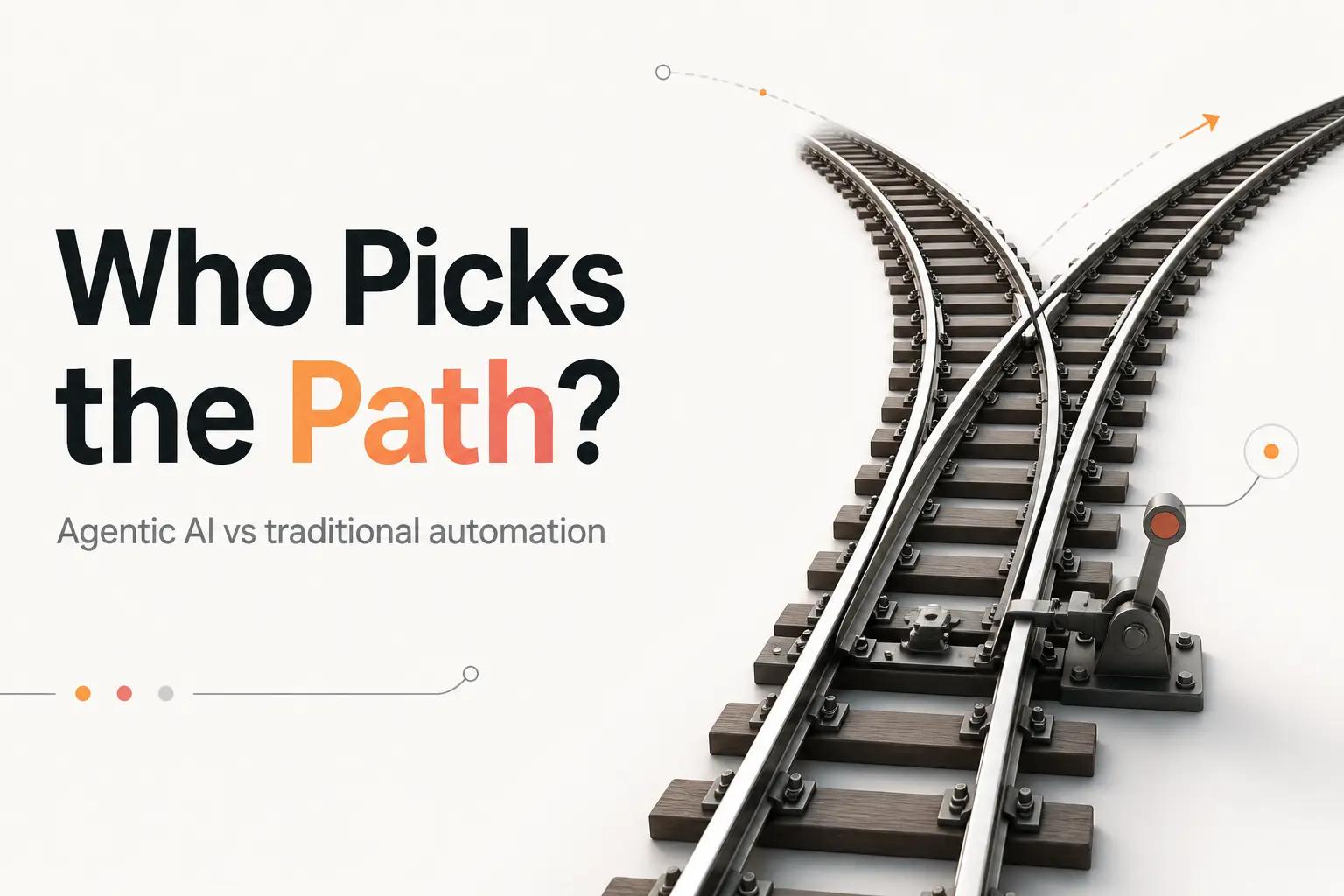
"Agentic AI vs traditional automation" is the decision sitting underneath that pitch. The two are not competing versions of the same product. They are two different answers to one question: who decides what happens next, you or the model. Get that straight and most of the confusion, and most of the overspending, falls away.
Quick verdict
For the vast majority of the busywork bleeding hours out of a lean team, traditional automation wins, and it is not close. A defined path is cheaper, predictable, and debuggable. Reach for agentic AI only where the input is genuinely ambiguous and you cannot write the rules in advance. The strongest builds are rarely one or the other. They are a deterministic workflow with a thin, tightly scoped layer of AI on the one step that needs judgment, which is exactly the work bottta does for teams of 1 to 50 people.
The one difference everything else follows from
Traditional automation runs on a path you defined. You wrote the if/then rules or scripted the steps, so the system's whole job is to follow them. This covers rule-based tools like Zapier and Make, robotic process automation that drives apps through their screens, and plain scripts. Every branch was decided at design time, by you.
Agentic AI hands that decision to the model at run time. You give it a goal and a set of tools, and it reasons about which tool to call next until it judges the goal met. Anthropic draws the cleanest line in its guide to building agents: a workflow is a system where models and tools follow predefined code paths, while an agent is a system where the model dynamically directs its own process and tool use. IBM frames the same split, calling agentic AI a framework that perceives, reasons, plans, and acts toward a goal, where traditional RPA follows strict prewritten rules.
That single shift, from a path you set to a path the model picks, is where every other difference comes from. It is worth stating plainly, because vendors sell the two as if they were the same technology at different tiers. They are not.
The most important consequence is determinism. Traditional automation is deterministic: the same input produces the same path and the same output, every run. Agentic AI is non-deterministic, because the model can choose different valid actions depending on context and sampling. The same ticket can take two different routes on two different days. That flexibility is the entire point of an agent, and it is also the entire source of its risk.
Traditional automation and agentic AI at a glance
| Traditional automation | Agentic AI | |
|---|---|---|
| Who picks the next step | You, at design time (if/then rules, scripted steps) | The model, at run time (reasons toward a goal) |
| Behavior run to run | Deterministic. Same input, same path | Non-deterministic. Same input can take different paths |
| What you pay per | A fixed unit per run (task, operation, execution) | Tokens per reasoning step, scaling with the loop |
| Main failure mode | Breaks visibly when a rule or screen changes | Acts wrong quietly, with full confidence |
| Auditability | Every step is the rule you wrote | You reconstruct why it chose what it chose |
| Maintenance | Update the rules when a system changes | Monitor behavior, tune prompts and guardrails |
The cost row is the one operators feel first. Deterministic tools bill a predictable unit: Zapier charges by the task on its pricing page, where the Professional plan runs $19.99 per month billed annually, and n8n bills by execution, with its Starter cloud plan at $20 per month billed annually per n8n's pricing. You can forecast that bill from your volume. An agent bills for the tokens it spends thinking, and because it re-sends context to the model on every step of its loop, the cost scales with how many steps it takes, not how many tasks it finishes. A chatty agent burns money a fixed workflow never would.
Where traditional automation wins
Most of the work a lean team wants to stop doing by hand is a known path with a handful of branches. A closed deal in HubSpot should create the Stripe invoice, post the link in Slack, and update the sheet. A form submission should land in the CRM and trigger the follow-up sequence. A nightly job should reconcile two systems and flag the mismatches. None of these needs a system that reasons about what to do next. They need one that does the same right thing every time.
Traditional automation is the correct default here for four concrete reasons.
- You can forecast the cost. A per-task or per-execution bill is predictable. You will not open an invoice you cannot explain.
- You can debug it. When something breaks, the path is the path you wrote. You read the rule, find the wrong branch, and fix it. There is no reconstructing why a model made a choice.
- It leaves a clean audit trail. For anything touching money, billing, or compliance, "the system followed this exact rule" is a far better answer than "the model decided." Finance and auditors want the former.
- It fails loud, not silent. When a rule or a screen changes, deterministic automation usually breaks in an obvious place. An agent can quietly take a wrong action and keep going.
If you can draw the flowchart of every branch a process takes, it is a workflow, and it should be built as one. Paying agentic prices to run a job you could diagram is the most common way teams overspend on this. Our roundup of workflow automation tools covers the deterministic options worth prototyping with.
Where agentic AI earns its keep
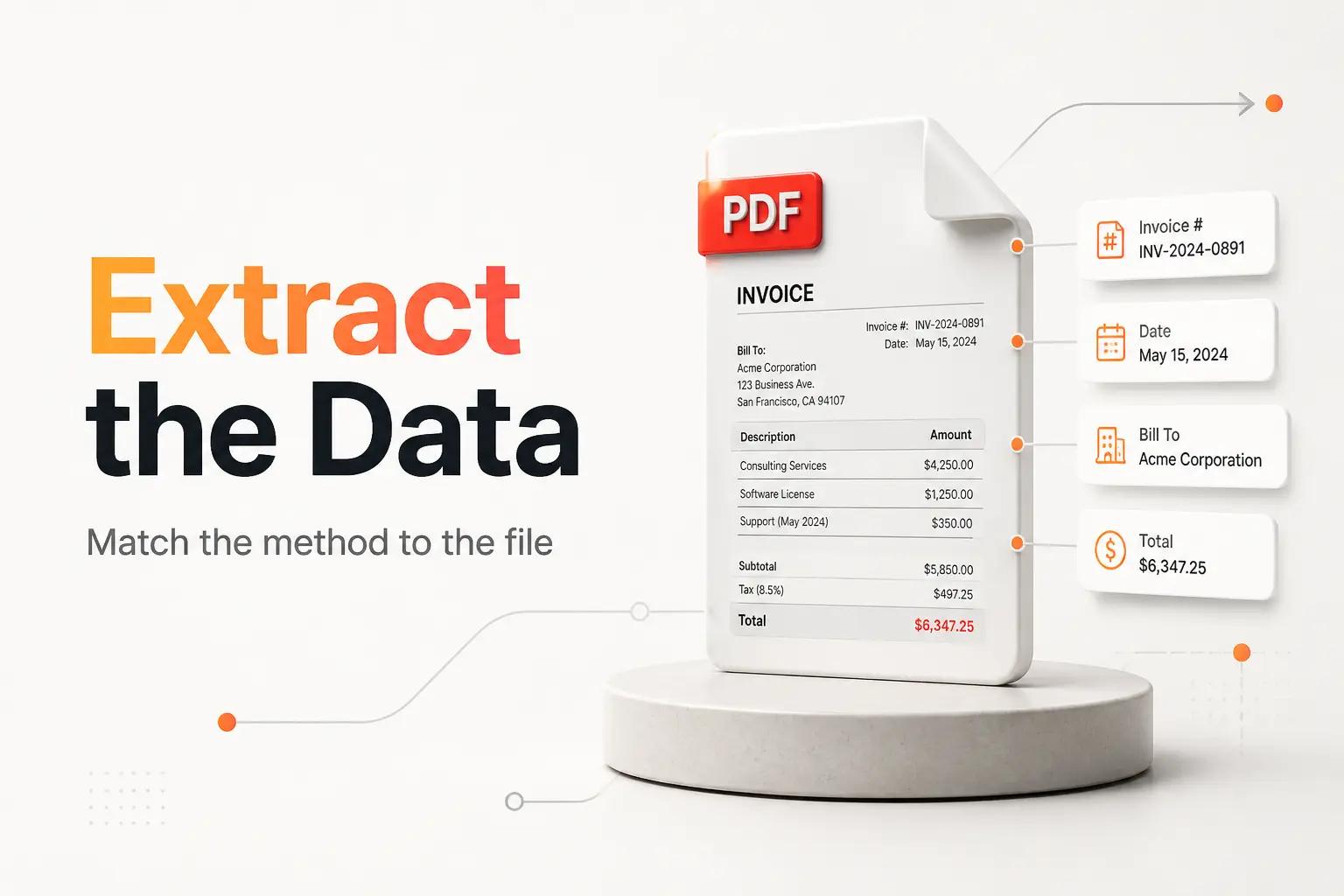
Agentic AI is worth it in one situation: the input is genuinely ambiguous and you cannot enumerate the branches in advance. Reading a messy, human-written support ticket and working out what it is actually asking for. Extracting fields from PDFs that arrive in fifty different layouts. Triaging a shared inbox where the right next action depends entirely on what the message says. These are jobs where a rigid rule set either misses cases or turns into a maintenance sinkhole, because you keep adding branches for inputs you never anticipated.
Even here, the stance we take is to scope the agency as narrowly as the job allows. In a refund-triage flow, only one step actually needs judgment: reading the ticket and classifying intent. Looking up the order, applying the policy, calling Stripe, posting to Slack are all known paths with clear rules. The durable build uses the model for the ambiguous read and hands the structured result to deterministic automation for everything after. The more steps you let a model decide unsupervised, the more surface area you have for a confident, expensive mistake. We go deeper on this in what agentic AI actually means and on the difference between a single agent and a full agentic system in agentic AI vs AI agent.
How to spot "agent washing" in a demo
A lot of what gets sold as agentic is not. In the same June 2025 forecast where Gartner predicts more than 40% of agentic AI projects will be canceled by the end of 2027 over escalating costs, unclear value, and weak risk controls, it names the reason a lot of them exist: "agent washing," where vendors rebrand chatbots, assistants, and rule-based automation as agentic. Gartner estimated that of the thousands of vendors claiming agentic AI, only around 130 were the real thing.
So the question to put to any demo is the one this whole post turns on: does the model decide the path, or is this a scripted flow with an LLM bolted on to write text? Ask the vendor to hand you the flowchart of every branch. If they can, you are looking at a workflow, which may be a perfectly good product, but you should not pay agentic prices for it. If they genuinely cannot, because the model chooses at run time, then the follow-up is sharper: how do you cap what it can do, how do you monitor every run, and what happens the first time it acts wrong on live data. A vendor who cannot answer that is selling you the risk without the controls.
How to decide
The honest recommendation for a team of 1 to 50 people, in order:
- If you can define the path, build deterministic automation. This is most ops busywork. Predictable, cheap, auditable.
- If one step needs real judgment, wrap a narrow AI layer around that step. Keep everything else deterministic.
- If the whole process is genuinely open-ended, and only then, consider a real agent, with hard limits, human approval on high-stakes actions, and monitoring on every run.
That order is the work bottta does. We are an automation studio that designs and builds the workflow, then keeps it running. Our default is deterministic and API-first, because a defined path does not improvise with your billing, and we bring in the model only where a step truly needs it: reading a messy ticket, extracting fields from a PDF, routing an email. That maps to four services: Workflow Design (mapping the process and the clean handoffs), Integrations (the APIs and webhooks between your tools), AI Automation (extraction, routing, and the narrow agent steps where they belong), and Custom Builds (the internal tools and dashboards behind it).
Two ways to work with us. The $4K project is fixed scope and fixed price, integrations included, with 30 days of post-launch support, right for one well-defined process. The $3K/month retainer gives you flexible hours, up to 3 active workflows at a time, and ongoing monitoring and fixes, right when the work keeps coming and you want someone owning it. If a process is simple and low-stakes, building it yourself on Zapier, Make, or n8n is a fair call, and all three now ship agent features for the times you need them. Before you commit either way, run the task through our test for when to automate and when not to, and see where the model actually pays off in AI automation for a small business.
The question was never agentic versus traditional, new versus old. It was how much of the path you can define in advance. Define what you can, reason over only what you must, and you spend the least while breaking the least. Book a call with bottta and we will tell you honestly which one your process needs.
Frequently asked questions
Is agentic AI better than traditional automation?
Not as a rule. They solve different problems. Traditional automation is better when the path can be defined in advance, which covers most repetitive ops work, because it is cheaper, predictable, and auditable. Agentic AI is better only when the input is genuinely ambiguous and the branches cannot be written out ahead of time. Picking the more autonomous option for a job that did not need it is how teams overpay.
Will agentic AI replace tools like Zapier?
No, and the tools themselves are betting against it by adding agent features rather than removing deterministic ones. Most workflows are known paths that run best as fixed rules. Agents get added for the specific steps that need judgment. The two live side by side in a durable build, with deterministic automation carrying the structured work and a model handling the one ambiguous step.
How do I know if a vendor's "agentic AI" is real?
Ask whether the model decides the path at run time or follows a flow the vendor designed. If they can hand you the flowchart of every branch, it is a workflow wearing an agentic label, which Gartner calls agent washing. If the model genuinely chooses its own steps, ask how they cap its authority, monitor each run, and handle a wrong action on live data.
Is agentic AI more expensive to run than traditional automation?
Usually yes. Deterministic tools bill a fixed unit per run, like a Zapier task or an n8n execution, so the cost tracks your volume. An agent re-sends context to the model on every step of its loop, so its cost scales with how many steps it takes, not how many tasks it finishes. A workflow that calls the model rarely, or never, is far cheaper than a system reasoning at every turn.
Can I combine the two in one process?
That is the pattern we recommend. Keep the stable, rule-based steps deterministic and add a narrow AI layer only where a step needs to interpret something. A refund flow reads the messy ticket with a model, then hands a clean decision to deterministic automation to look up the order, apply the policy, and issue the refund. You get the judgment where it matters and predictability everywhere else.